How to Look Up DNS Records (A, MX, TXT, and More)
Look up A, MX, TXT, and more over DNS-over-HTTPS, then read status, TTL, and answers for mail and web checks.
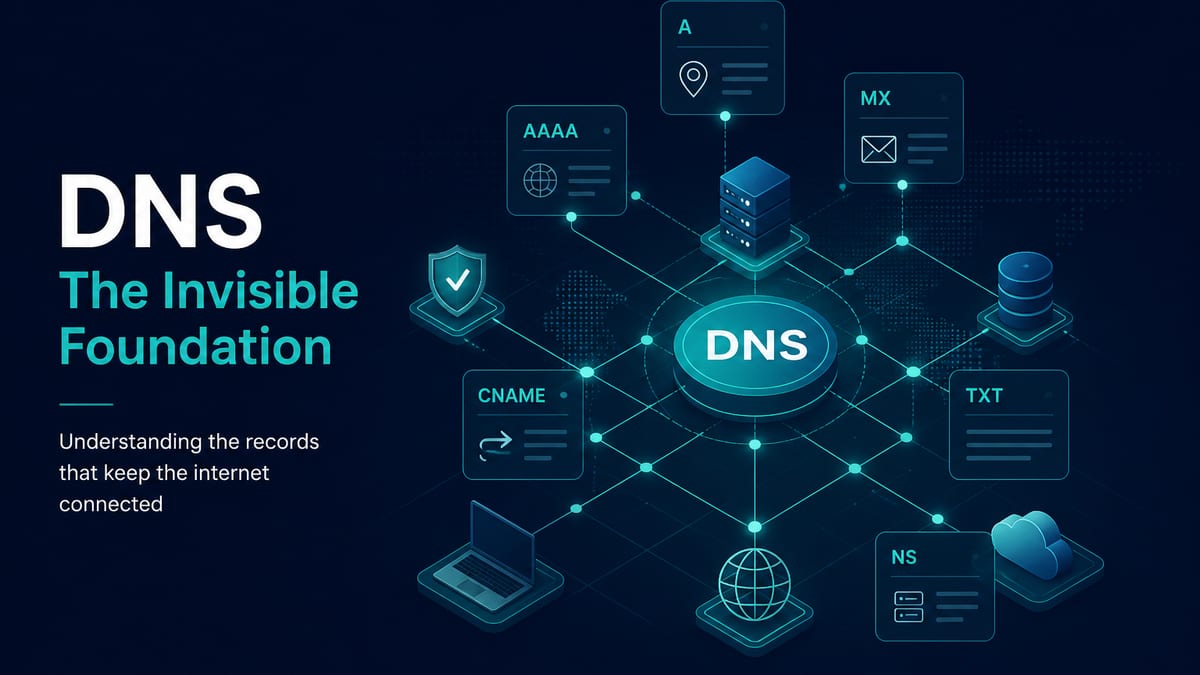
DNS answers the “where does this name point?” question for web, mail, and many security checks. Looking up the wrong record type—or reading only your ISP’s cache—is a common reason “it works on my laptop” fails elsewhere.
The Haivix DNS Lookup queries Cloudflare DNS-over-HTTPS for A, AAAA, MX, NS, TXT, CNAME, SOA, CAA, and PTR. You get status (NOERROR, NXDOMAIN, and similar), DNSSEC AD yes/no, and each answer’s data, TTL, and name. The hostname and type go to Cloudflare; Haivix does not store the query.
How to run a lookup
Enter a hostname (or IPv4 for PTR). The tool strips http(s):// and paths and trims a trailing dot. Pick a record type and run—Enter also starts the lookup. One type per run; there is no bulk host list.
For PTR, a dotted IPv4 is rewritten to x.x.x.x.in-addr.arpa automatically. There is no IPv6 → ip6.arpa helper. Copy results saves the text report.
What each common type is for
A / AAAA map names to IPv4 / IPv6. CNAME aliases one name to another. MX names mail exchangers and priorities. TXT holds SPF, DKIM selectors, verification strings, and more. NS and SOA describe authoritative servers and zone metadata. CAA constrains which CAs may issue certificates.
Answers reflect Cloudflare’s view, not necessarily your ISP resolver. TTL tells you how long caches may keep the answer—not that every client has already refreshed.
What this tool is not
It is not WHOIS or RDAP (use Domain RDAP Lookup for registration data). It is not dig +trace, zone transfer, or a custom resolver picker. For address format conversion, use the IPv4 Converter. Port numbers belong in Port Lookup.
Checklist for a mail or website change
Open the DNS Lookup, choose the record type, run the query, and copy the report into your change ticket.
- You queried the exact name clients use (www vs apex).
- A/AAAA and MX (if mail) match the new targets.
- TXT for SPF/DKIM/DMARC was checked after edits.
- TTL and status are NOERROR where you expect data.
- You waited for caches when TTLs were long.
- You confirmed from more than one resolver if the change is critical.